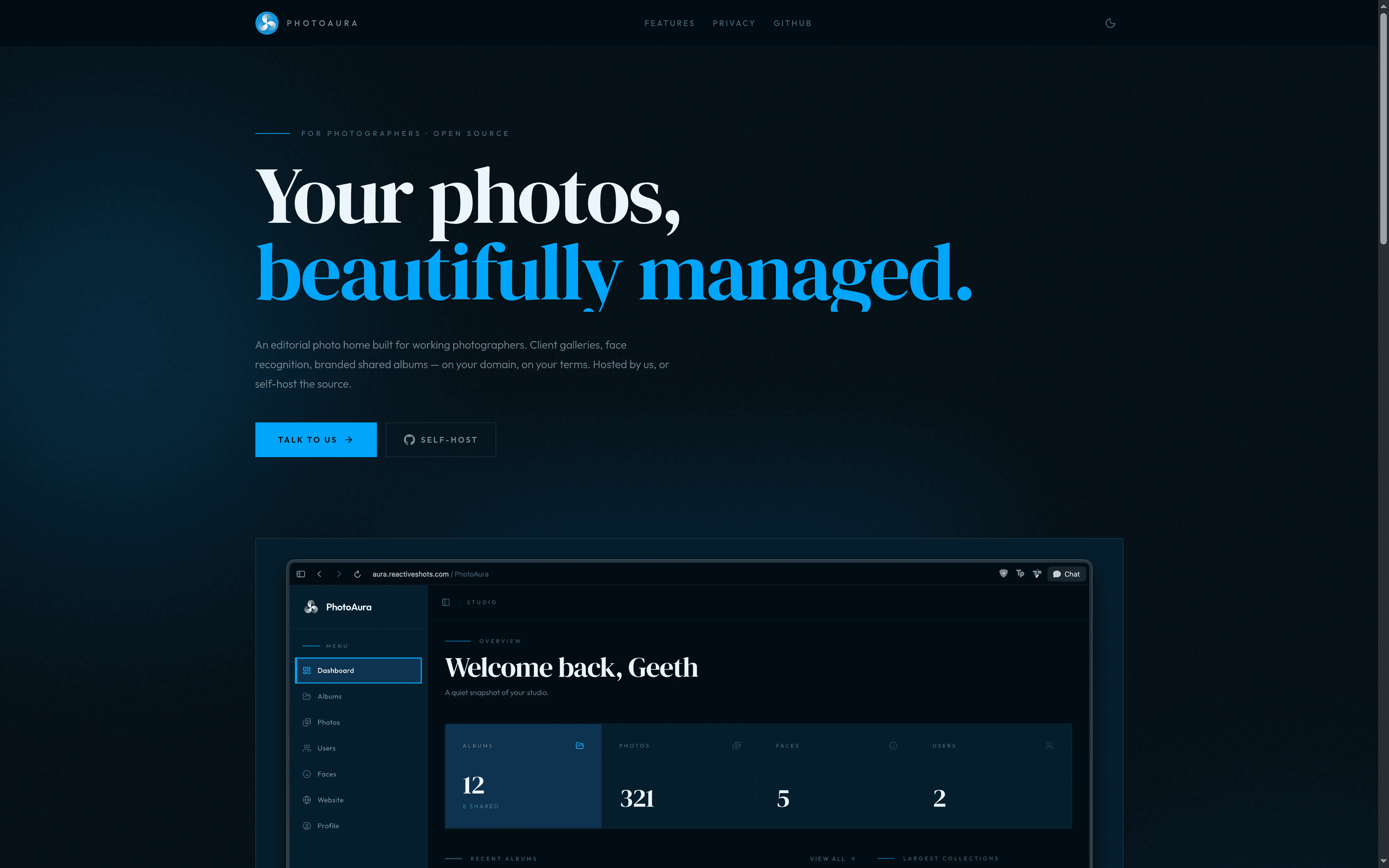
Folders are where photos go to die
A wedding ends with four hundred files behind a shared password, and the delivery email reads like an invoice. Clients dig through a dump of everything to find the ten photos they’re in.
PhotoAura started from the client’s side of that exchange — what if the gallery already knew who you were?
Faces at upload, not at download
Every photo that lands in an album gets indexed by AWS Rekognition while it uploads, so each album surfaces the distinct people in it. The client taps their own face in the People row and the gallery answers.
It’s the difference between a folder and a concierge — the finding work happens once, on the photographer’s side, instead of a hundred times on the client’s.
A link instead of a password
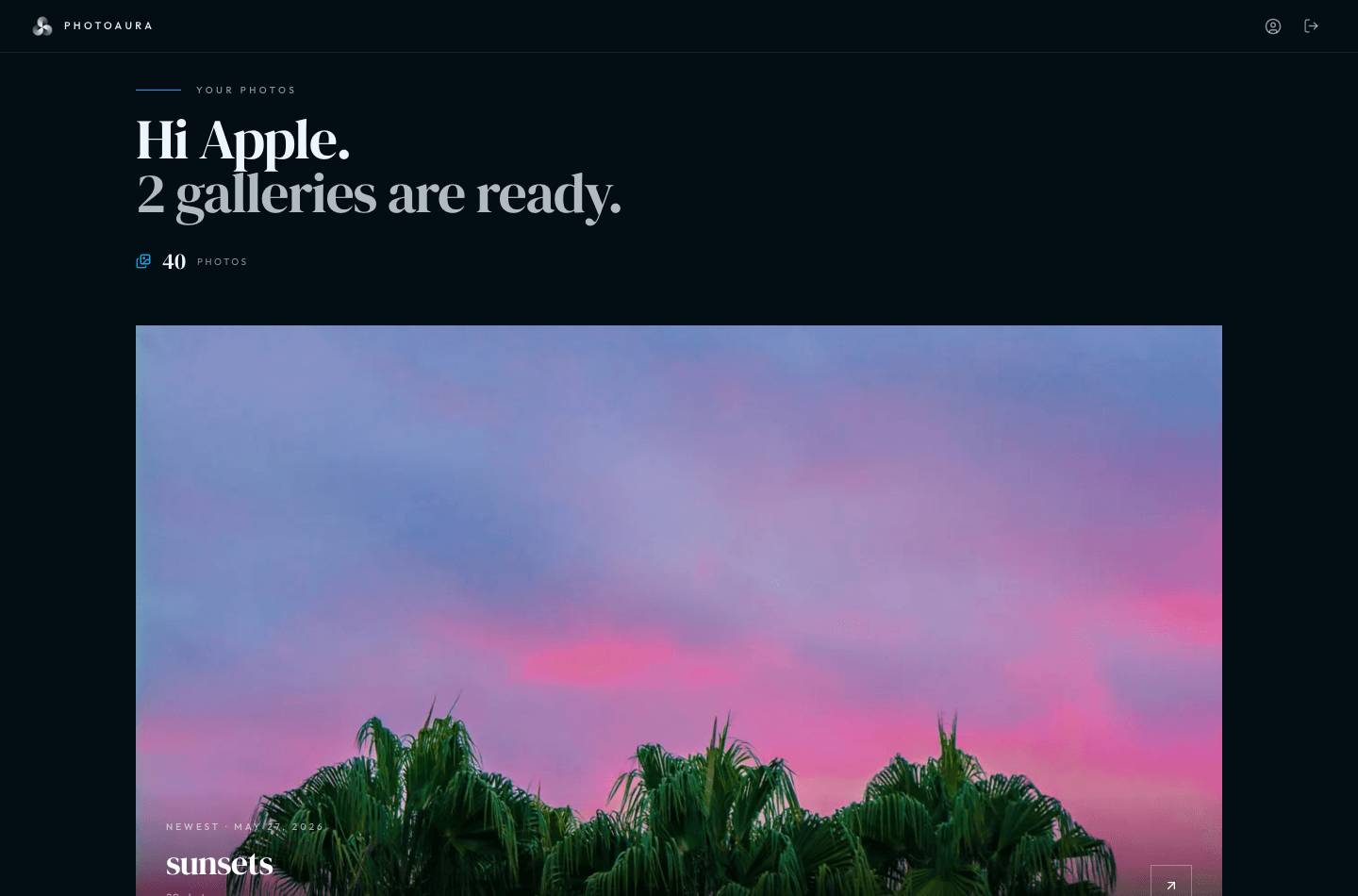
Inviting a client is a name and an email. They get a branded message with a one-click sign-in — no account ceremony, no password to forget before the next shoot.
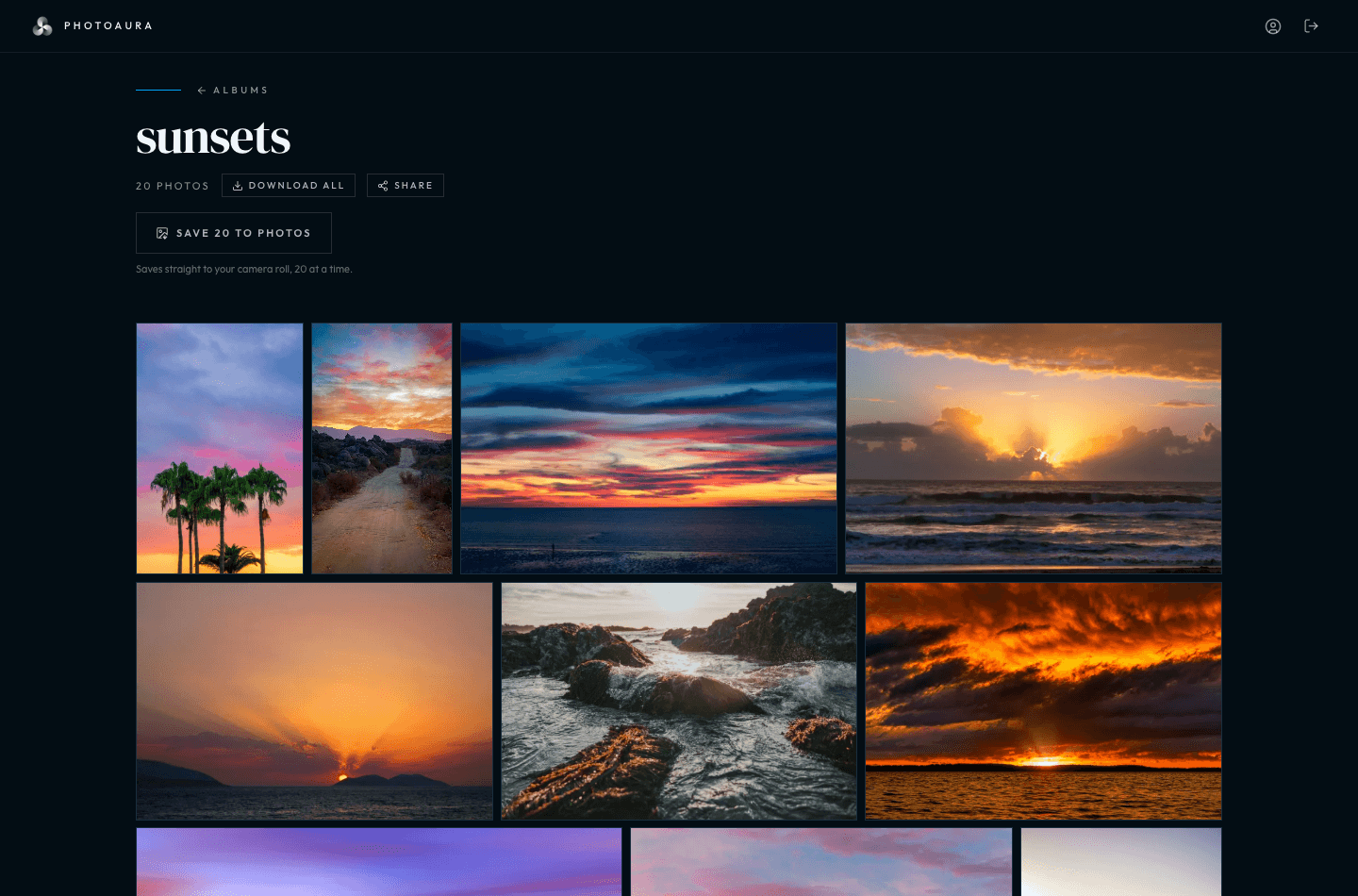
Inside, the gallery behaves like the photographer’s portfolio: justified masonry at true aspect ratios, a lightbox that slides, video that plays in place, and one-click downloads of the raw original.
The whole stack is yours
FastAPI on the back, S3 and CloudFront transforms on the edge, Next.js for the portal, a native iOS app for pockets — and the whole thing is open source. Run it yourself or let us host it at aura.reactiveshots.com.
The same gallery engine powers the photographer’s public site, so a shoot becomes a portfolio piece the day it’s delivered.